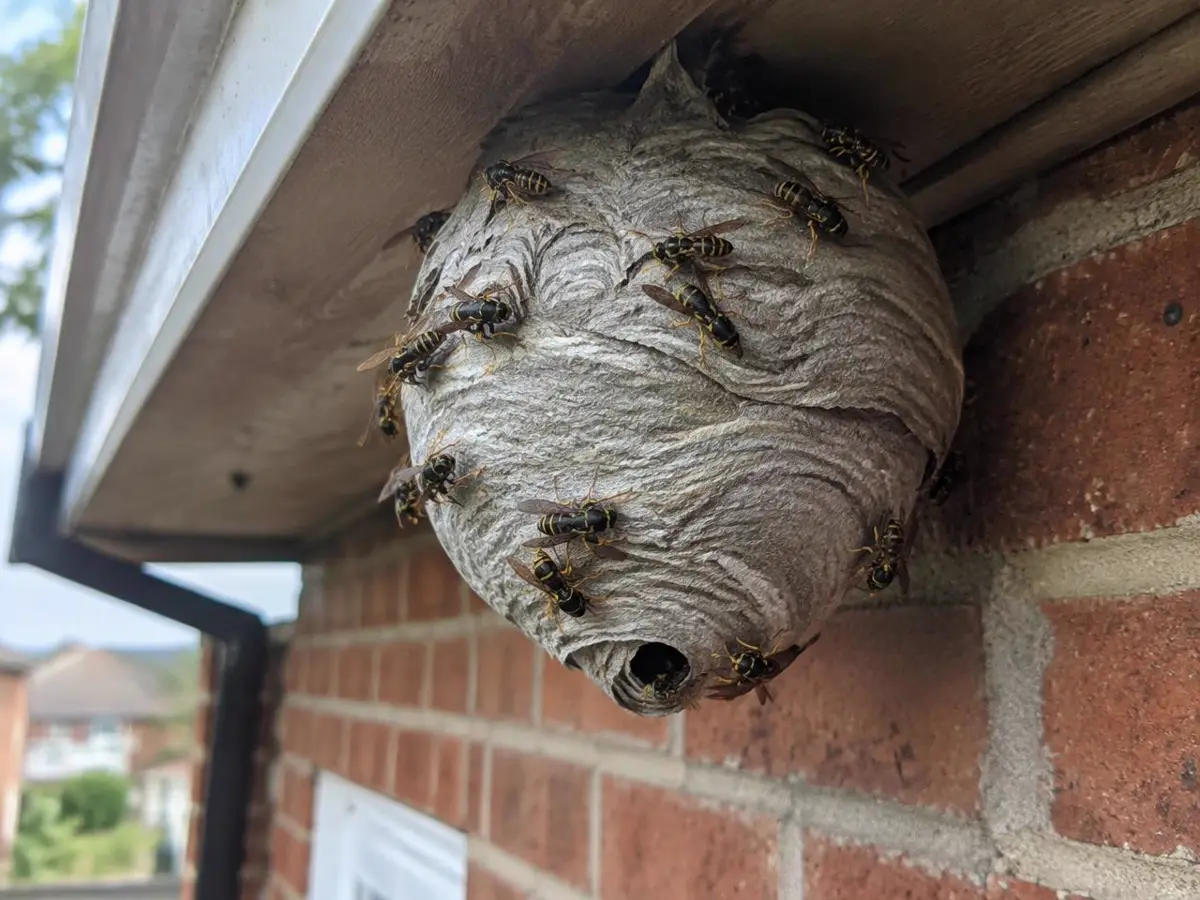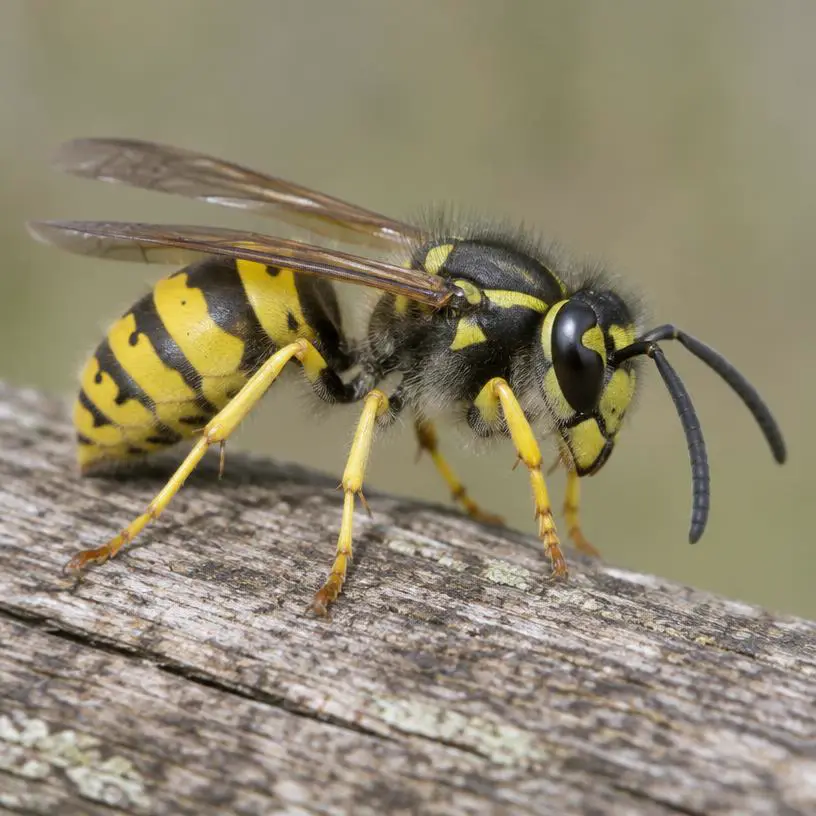
For a homeowner, the useful point is simple: a wasp nest is quietest at night, but it is never switched off.
Key facts
- Common and German wasps are daytime insects.
- European hornets often keep flying after dark, especially on warm summer evenings.
- Over winter, the picture changes completely.
What wasps actually do after dark
Common and German wasps are daytime insects. They rely on light to find food and to navigate back to the nest entrance, so foraging slows as the light fades. By dusk most workers have flown home, and the steady traffic you see during the afternoon stops.
Inside the nest the colony carries on at a slower pace. Some workers stay near the entrance as guards, others tend the grubs, and many simply stay motionless on the comb. Studies of paper wasps and other social insects show longer still periods at night, with antennae lowered and slower reactions to touch.
That is why scientists use the phrase sleep-like rest.
Is it sleep or just rest?
True sleep is hard to prove in an insect, because researchers cannot measure brain waves the way they do in mammals. Instead they look for signs such as long periods without movement, a set posture, slower response to disturbance and a daily rhythm.
Wasps show several of these signs, so the honest answer is that they rest in a way that looks a lot like sleep.
What wasps do not do is shut down completely. A guard wasp disturbed at midnight can still react, and a knocked or shaken nest will wake quickly. Warm nights also keep a colony more alert than cold ones.
Hornets are the exception
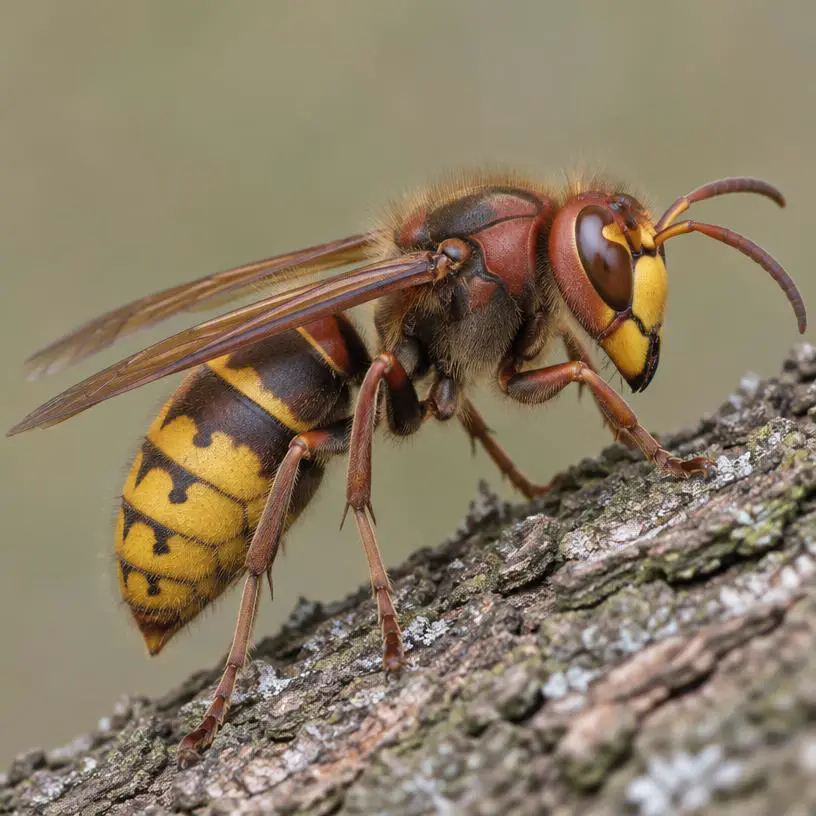
European hornets often keep flying after dark, especially on warm summer evenings. They are attracted to lit windows and outdoor lights, which is why people sometimes find a large hornet bumping against the glass late at night or one that has come indoors through an open window.
If hornets come into a lit room at night, switch the light off, open the window wide and leave the room for a while. Most will find their way out towards the outside light. Keep windows near a known hornet nest closed or screened after dark.
Queens hibernate rather than sleep
Over winter, the picture changes completely. Worker wasps and males die off in late autumn, and only newly mated queens survive. Each queen finds a sheltered spot, such as a gap in a shed, a fold of curtain or a corner of the loft, and goes into a deep winter dormancy.
This is not nightly rest. A hibernating queen barely moves for months and wakes when spring warmth returns. Finding one in a shed or loft in winter does not mean there is an active nest, and she should simply be left where she is or moved outside carefully.
Why this matters for a nest at your home
Because workers come home at dusk, a nest is usually at its fullest in the evening and early morning. More wasps are inside, which is why entrance treatment around those times can work well, and it is also why you should never poke, block or spray a nest entrance at night yourself.
A disturbed colony will pour out, even in the dark.
Our treatments are carried out between sunrise and sunset, from the ground with a telescopic pole. Many people find a nest in the evening and ring us after dark, which is fine: we are open until 9pm and can book a visit for the next day.
Keep windows near the nest shut overnight, particularly if a light is left on in that room.
Avoid using outdoor lights right beside a nest entrance on warm evenings.
Do not try to remove, block or flood a nest after dark on the basis that the wasps are asleep.
Note where the wasps go in during the evening, from a safe distance, so you can tell us the entrance position.
Wasps resting on walls and windows
Sometimes a single wasp will settle on a wall, fence or curtain and stay there for hours. On cool evenings a wasp that is too far from the nest may stop and wait for warmer air rather than fly home. In late autumn these are often old workers near the end of their lives.
A lone resting wasp is not a sign of a nest. Repeated traffic in and out of one gap during the day is the sign to look for.
Do
- Keep windows near a known hornet nest closed or screened after dark.
- Keep windows near the nest shut overnight, particularly if a light is left on in that room.
- Note where the wasps go in during the evening, from a safe distance, so you can tell us the entrance position.
Don't
- Avoid using outdoor lights right beside a nest entrance on warm evenings.
- Do not try to remove, block or flood a nest after dark on the basis that the wasps are asleep.
Frequently asked questions
Do wasps come out at night?
Common wasps rarely fly at night. They return to the nest at dusk and stay inside until light returns. European hornets are different and often fly after dark, drawn to lit windows.
Are wasps calmer at night?
They are less active, but not harmless. A colony that is disturbed after dark will still defend the nest, so never tackle an entrance yourself because it is late.
Can I ring you about a nest in the evening?
Yes. We take calls until 9pm, seven days a week. Treatment happens in daylight, so evening calls are usually booked for the next day.