
Nest location guide
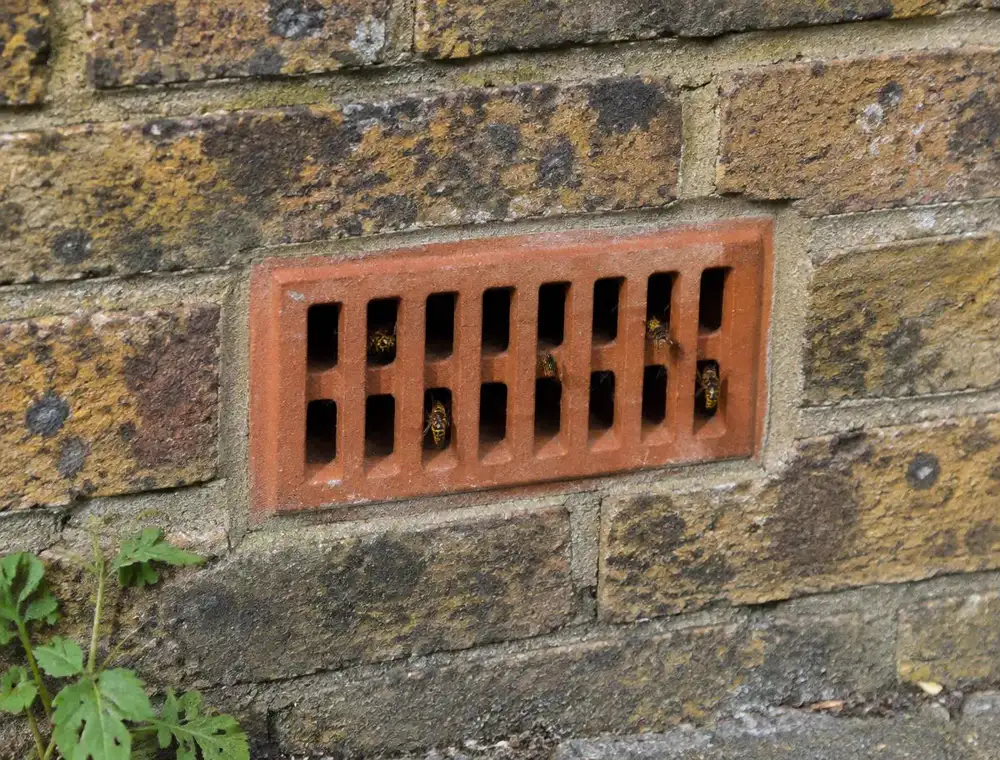
A wasp nest in the air brick
Wasps flying through an air brick usually have a nest in the cavity or underfloor space behind it. The vent must stay open, both for the insects’ treatment route and for the building’s ventilation.
One message and a technician confirms the price and a time to visit.
What should I do about a nest in the air brick?
- Do not tape or cover the air brick
- Keep toys and pet bowls away from the vent
- Never insert a hose or aerosol through the grille
How is this nest treated?
We confirm the occupants and place insecticidal dust through the aperture they are using. Treatment targets their route into the connected void; the air brick remains in place and unblocked.
How long does treatment take to work?
Air-brick colonies generally quieten in 2–3 hours and are fully inactive within 24 hours of treatment. Keep people and pets away from the vent meanwhile.
What lies behind a busy air brick
The grille may lead into a wall cavity or ventilate the space beneath suspended timber flooring. A queen can pass through one of its openings and build out of sight behind the wall, so an air brick full of traffic does not mean the nest sits inside the brick itself.
Bees also use low building openings, including bumblebees nesting beneath floors. We identify the insect before choosing treatment; a bee colony is referred for beekeeper advice, not treated as wasps.
Low-level warning signs to watch for
Observe from the side at a distance and note which vent receives regular arrivals. Wasps queuing at one aperture or carrying material through it indicate a fixed route into the void.
Activity beside a patio, play area or dog run creates a practical risk even when the nest is hidden. Keep balls, bowls and garden tools elsewhere so nobody has to bend down near the entrance.
The risks of a blocked vent
Taping over the grille can divert insects into another opening under the floor or inside the house. It also interrupts airflow designed to keep the floor void ventilated.
Water from a hose can wet concealed timber and does not reliably reach the nest. Prodding through the grille puts your hand directly beside the flight route and can disturb workers within the opening.
Treating the route through the grille
After checking the species and the vent’s function, we apply an appropriate insecticidal dust at the occupied aperture. Workers crossing that point carry the treatment towards the colony beyond it.
This is a targeted application, not indiscriminate filling of every vent on the house. Nearby animals, open windows and the use of the connected space are checked before work; there is no need to prise the air brick out.
How soon the low-level traffic stops
Expect a marked reduction within 2–3 hours and full nest inactivity within 24 hours after treatment. The opening remains accessible during that time so returning foragers pass through the treated route.
Do not let a pet investigate dead or dying insects at the vent. Contact us if regular arrivals and departures continue after a full day; the price includes a free revisit when required.
Keeping airflow while reducing future access
The dead nest normally stays behind the vent unless separate floor maintenance requires access. A later queen starts a new nest rather than occupying those old cells.
Replace broken air bricks with a suitable ventilation product once the colony has stopped. Ask a building professional about compatible pest-resistant grilles; improvised fine mesh or solid covers can reduce the airflow the timber floor needs.
Frequently asked questions
Does an air-brick nest always mean wasps?
Bumblebees can use the same underfloor shelter, so the entrance location alone is not enough to choose pest treatment.
Must floorboards come up to treat it?
An established route through the vent often allows treatment from outside without lifting the floor.
Is it safe to cover the grille at night?
No: a quieter flight line in the evening does not empty the colony, and covering the vent obstructs both its access and the floor ventilation.
Treatment and local advice
How nest treatment works · Wasp and hornet guides · Find your town
Price
£129 fixed price, wasps or hornets. No call-out fee. Free revisit if required. See how pricing works.
Other nest locations
Speak to a technician, not a call centre.
Fixed price on the phone. No call-out fee. Free revisit if the nest is still active.