
Nest location guide
A wasp nest in the garden and underground
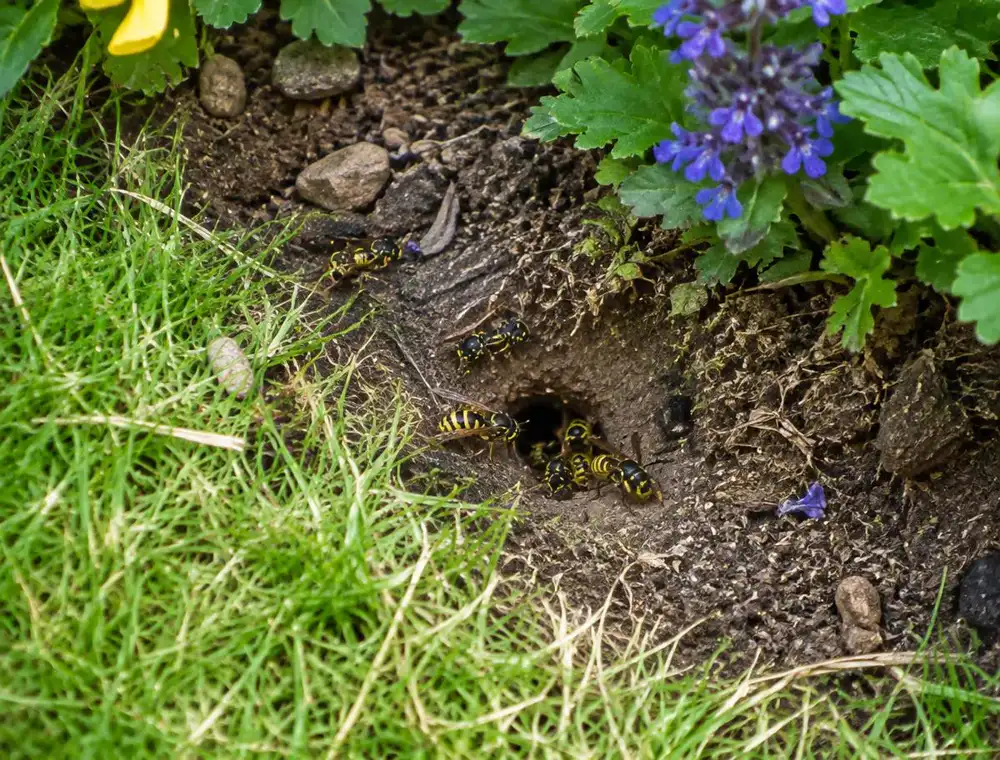
A regular stream of wasps entering one soil hole can indicate a nest in an old burrow. Stop mowing or digging nearby, keep dogs away and do not flood the opening; bumblebees must be ruled out first.
One message and a technician confirms the price and a time to visit.
What should I do about a nest in the garden and underground?
- Stop mowing, strimming and digging beside the hole
- Do not flood, burn or fill an occupied burrow
- Keep children and animals outside the flight area
How is this nest treated?
After identification, we apply a suitable insecticidal dust at the established burrow entrance. A lance keeps the technician away from the flight route while workers take the treatment into the underground colony.
How long does treatment take to work?
Underground nests usually go quiet in 2–3 hours and are fully inactive within 24 hours. Keep the lawn or bed around the hole off limits during that time.
Burrows, banks and gaps beneath garden structures
A queen can occupy a disused rodent burrow, a sheltered bank or a space beneath a shed base. The narrow opening leads to a larger chamber, so the paper nest can be well below the surface and invisible without excavation.
Bumblebees choose some of these same shelters. We check the occupants before treating; a busy hole is not sufficient evidence to call every underground colony wasps.
Recognise the flight route before mowing
Repeated low flights terminating at a single hole are the main warning sign. Wasps spread across flowers or fallen fruit are feeding and may have no nest in that bed.
Use a fence post or another distant landmark to describe the entrance rather than walking over to mark it. A nest beside stepping stones, a lawn edge or a play area needs the affected section kept clear.
Why water and garden tools are dangerous here
A mower, spade or strimmer can strike the chamber or transmit vibration through the soil before you see the nest. Defensive insects then emerge at ankle height, close to anyone standing over it.
Flooding does not give controlled access to the colony, and fuel or fire creates serious additional hazards. Filling the hole while it is occupied can leave another hidden exit rather than solve the problem.
Treating through the existing ground entrance
We confirm wasps, inspect the entrance and check nearby paths, animals and water features. An appropriate dust treatment is placed at the occupied opening using a lance, without digging the nest out.
Workers travelling between the surface and the chamber carry the treatment through their route. We specify the area to avoid afterwards, taking account of pets and the way people normally cross the garden.
When the garden section becomes quiet
Typical underground colonies quieten within 2–3 hours, reaching full inactivity within 24 hours after treatment. Leave the entrance undisturbed while foragers return to it.
Inspect the flight route from outside the restricted area the next day, not by putting a stick into the hole. Persistent arrivals or departures after 24 hours should be reported for a free revisit.
Leaving the buried nest and checking next spring
The dead paper nest normally remains underground; excavating it is not needed to stop reuse. Later queens build fresh nests, although a sheltered chamber may attract another colony if its access remains available.
Once inactivity is confirmed, repair a hazardous hole or damaged lawn edge as appropriate. Check for living wildlife before filling burrows, and make a visual flight-line check before mowing a previously affected bank next season.
Frequently asked questions
Can I mow the other side of the garden?
Keep machinery well away from the occupied hole and its flight route; the restricted section should remain untouched until activity ends.
Will the nest be dug up?
Normal treatment uses the burrow entrance, leaving the chamber in place rather than excavating the lawn.
What if the hole contains bumblebees?
The bee colony stays untreated; we advise on leaving it undisturbed and obtaining suitable beekeeper guidance where needed.
Treatment and local advice
How nest treatment works · Wasp and hornet guides · Find your town
Price
£129 fixed price, wasps or hornets. No call-out fee. Free revisit if required. See how pricing works.
Other nest locations
Speak to a technician, not a call centre.
Fixed price on the phone. No call-out fee. Free revisit if the nest is still active.