
Nest location guide
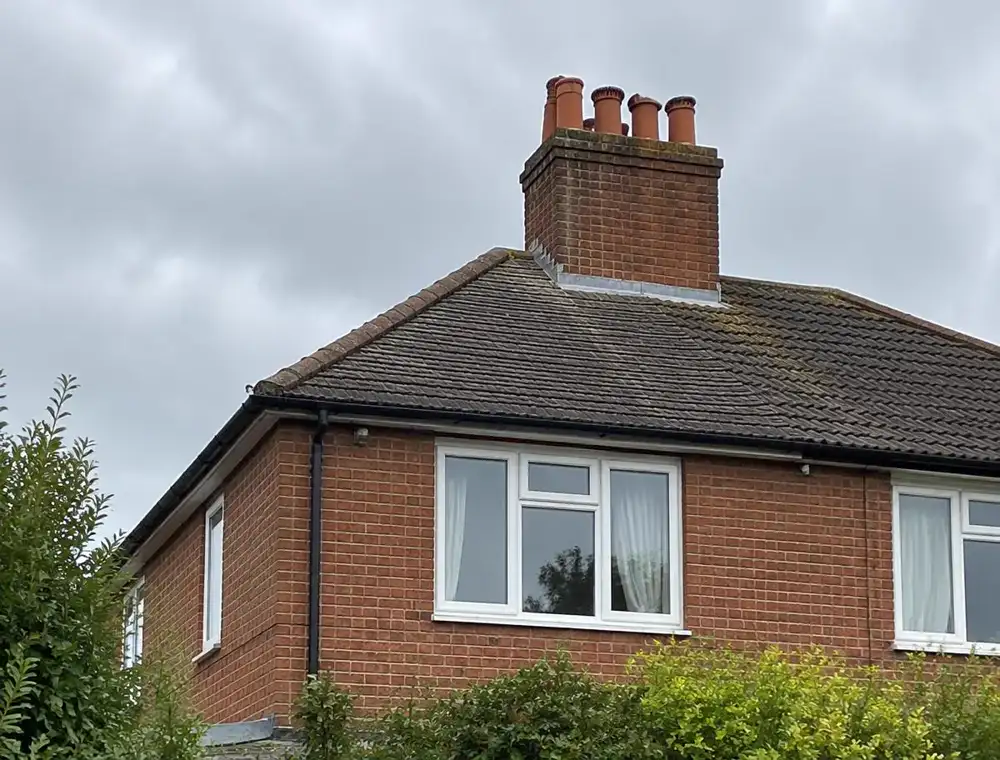
A wasp nest in the chimney
Wasps can occupy a disused flue or a gap around a chimney stack. Do not light a fire to drive them out: we assess the external entrance, its reach and the use of the flue before deciding on treatment.
One message and a technician confirms the price and a time to visit.
What should I do about a nest in the chimney?
- Do not light a fire or stove to smoke insects out
- Leave caps and fireplace closure plates untouched
- Stop using any appliance connected to a suspected obstructed flue
How is this nest treated?
We check which chimney opening the wasps use and whether it is reachable with a telescopic lance from the ground. A suitable external entrance receives targeted dust treatment; an inaccessible flue needs a different specialist assessment.
How long does treatment take to work?
A successfully treated chimney colony usually settles in 2–3 hours and is fully inactive within 24 hours. Keep the connected fireplace or appliance out of use pending flue advice.
How a chimney becomes a nesting site
An unused flue offers weather protection, while cracks around the stack or flashing can lead into neighbouring roof voids. The entrance at the chimney does not automatically mean that the nest is inside the working flue.
Honeybees also occupy chimneys, sometimes with a substantial comb below the visible opening. Their removal requires bee-specific advice; insect size and a high entrance are not enough to diagnose wasps.
Stack traffic and insects at the hearth
From the ground, identify the chimney face receiving repeated insect entry. Occasional insects circling above a pot are less conclusive than a stream going into one gap.
Tell us about wasps reaching a fireplace, an upstairs blocked hearth or a room beside the chimney breast. Do not remove the plate, cap or surrounding masonry to investigate the route.
Why smoke is not a safe answer
A fire can force insects towards a fireplace or another indoor exit rather than destroy the colony. A disused flue may also contain an obstruction, making heat and smoke an additional hazard.
Never pour liquid down a chimney or attempt treatment through an appliance connection. Keep a suspect flue out of service and involve a suitable chimney or appliance professional if its condition is uncertain.
Assessing a ground-based chimney treatment
We establish the species, the exact external entrance and whether the chimney serves a live appliance. Where a safe line exists from the ground, a telescopic dust lance delivers treatment into the workers’ entrance.
A tall or shielded stack is not automatically reachable, and treatment is not promised simply because a chimney can be seen. We explain an access limitation before work; opening a flue or changing its terminal is a separate specialist job.
The first 24 hours after chimney treatment
Once the colony has been successfully treated, activity normally fades in 2–3 hours and ends within 24 hours. Continue keeping the hearth area clear while returning insects settle.
A quiet chimney is not evidence that its flue is safe to use: any suspected obstruction still needs professional assessment. If live nest traffic remains at the treated stack after 24 hours, ask us about the included revisit.
When physical removal is necessary
An empty nest beside the stack can usually be left, but material obstructing a flue must be assessed before the flue returns to use. A chimney professional can determine whether sweeping or removal is needed once the insects are inactive.
For prevention, have damaged pointing and flashing repaired and discuss a correctly specified terminal for a disused chimney. Never cap a working flue or seal required ventilation purely to exclude insects.
Frequently asked questions
Can I use the stove once the wasps stop flying?
Only after the connected flue is confirmed suitable for use; pest inactivity does not rule out an obstruction.
Do chimney bees get the same treatment?
They do not: we leave bees untreated and recommend beekeeper guidance for the colony and any comb.
Will you treat any chimney height?
The lance needs a reachable entrance and a safe ground position, so a photograph showing the stack and surrounding roofs helps us assess suitability.
Treatment and local advice
How nest treatment works · Wasp and hornet guides · Find your town
Price
£129 fixed price, wasps or hornets. No call-out fee. Free revisit if required. See how pricing works.
Other nest locations
Speak to a technician, not a call centre.
Fixed price on the phone. No call-out fee. Free revisit if the nest is still active.