
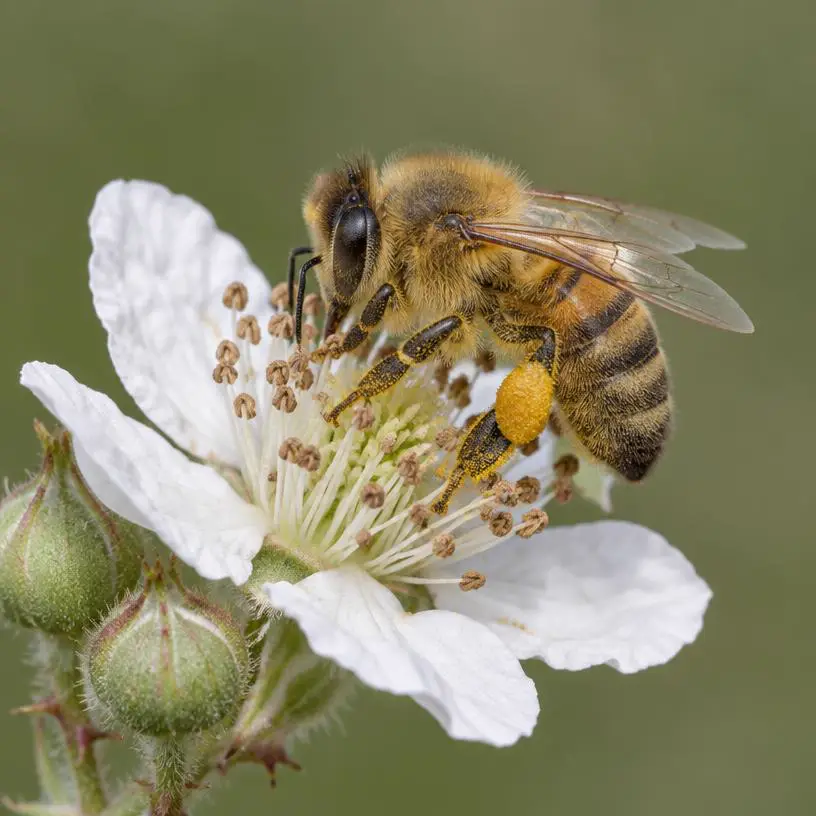
What should I do if I cannot tell whether insects are bees or wasps?
Keep away from the entrance and obtain identification before considering treatment. A safe photograph may help, but colour alone is not enough to identify every insect. We never treat bees; bee nests and swarms should be referred to a beekeeper or a BBKA swarm collector.
Why identification comes before wasp control
An insect going into a hole in a wall is not automatically a wasp. Bees use buildings too, and hoverflies can resemble stinging insects while visiting flowers. Correct identification avoids unnecessary treatment and helps you decide whether to leave activity alone, speak to a beekeeper or seek advice about an active wasp nest.
We never treat bees. For a suspected honeybee swarm, contact a local beekeeper or use the BBKA swarm collector service. If you are unsure, obtain a photograph only from a position that is already safe. Do not catch an insect by hand, disturb a cluster or move closer to an entrance solely to improve the image.
Typical wasp appearance and movement
Common social wasps usually have clear yellow and black markings, a relatively smooth appearance and a narrow waist. They often make purposeful trips in and out of a single nest entrance. Workers may also visit food, bins, flowers or water well away from the colony, so appearance and movement need to be considered together.
Avoid treating “shiny equals wasp” as an absolute rule. Small bees and other insects can appear smooth from a distance, while lighting changes how colours look. A photograph showing the whole insect is more helpful than a description based only on its stripe pattern. There is no need to chase it or expose yourself to repeated passes at a busy opening.
Honeybees and swarm clusters
Honeybees are generally less sharply yellow than familiar social wasps and are often seen visiting flowers. Their appearance varies, so colour alone is not enough. A conspicuous cluster hanging from a branch, fence or similar surface may be a honeybee swarm: a group temporarily gathered while seeking a new home.
Keep people and pets clear and contact a local beekeeper or BBKA swarm collector. Do not spray it with insecticide or water, shake the branch or try to put it into a container. A swarm is different from an established colony inside a building; describe whether the bees are clustered outside or repeatedly entering a cavity so the beekeeper can explain appropriate next steps.
Bumblebees and smaller solitary bees
Bumblebees are often rounder and hairier than social wasps, with markings that vary by species. Some use existing cavities, including spaces in buildings. A small group around a roof edge does not automatically mean a wasp nest, and bee activity can often be left undisturbed where the site does not conflict with everyday access.
Solitary bees may use small holes in mortar, soil or suitable nesting materials. Several working near one another can look like a shared colony even though their nesting biology differs from social wasps. We do not treat these bees. Seek identification and suitable bee advice rather than sealing busy holes or applying a product intended for wasp nests.
Hoverflies, hornets and misleading shortcuts
Some hoverflies mimic yellow-and-black insects and can hover around plants without being wasps. Flight style is a clue, not a complete identification test. Likewise, a large insect is not necessarily a dangerous hornet: queen wasps, bumblebees and other insects can all surprise someone who has only seen smaller workers.
European hornets are native and usually show reddish-brown areas with a yellow abdomen. Suspected Asian hornets need a separate response: report them to GB NNSS through the Asian Hornet Watch app and do not treat a suspected nest. Yellow leg tips and a predominantly dark body with a broad orange abdominal band are useful Asian hornet clues, but safe photographic reporting is preferable to close inspection.
What the nest and location can tell you
A papery exposed structure can support a wasp or hornet identification, while an exposed swarm cluster points towards honeybees. In a concealed roof space, however, you may see no nest at all. The material of the house, the height and the season cannot identify the insect by themselves.
Middlesex 1930s semis and Victorian terraces both contain sheltered gaps that several species can use. Gardens and nearby parks bring ordinary flower visitors as well as insects seeking nesting sites. Describe the insect, repeated entry point and any visible structure separately. Do not lift tiles, open a cavity or cut back vegetation to make those details easier to see.
Safety while you wait for identification
Keep children, pets and visitors away from a busy entrance or clustered insects. Postpone work that might disturb the area, including hedge cutting and repairs. Do not block openings or test the insects by tapping nearby surfaces. Bees as well as wasps can sting, so uncertainty is a reason to maintain distance rather than to handle them.
If stung, move away, wash the skin and apply a cold compress wrapped in cloth. Call 999 for breathing difficulty, swelling of the mouth or throat, faintness or collapse, and use a prescribed adrenaline auto-injector as directed. Knowing the exact insect is not a prerequisite for emergency care and should never delay the call.
When confirmed wasps need professional help
A confirmed wasp nest may be left alone if it can remain undisturbed away from people. Call when its entrance crosses an unavoidable route, insects repeatedly enter living spaces or somebody with a known sting allergy may be exposed. Food-seeking visitors alone often call for covered drinks and better waste management rather than nest treatment.
We are based in Ruislip, Middlesex, and treat wasp nests from the ground with a telescopic pole. There is one fixed price given on the phone, no call-out fee and a free revisit. Share what you have safely observed and explain any identification uncertainty before booking. If the insects are bees, the next step remains bee advice, not a wasp-control visit intended to treat them.
Frequently asked questions
Do you treat bees?
No. We never treat bees. Contact a local beekeeper or BBKA swarm collector for suitable help with honeybee swarms.
Is every yellow-and-black insect a wasp?
No. Bees, hoverflies and other insects can have similar colours. Use several clues and safe photographs.
Should I spray a hanging cluster?
No. It may be a honeybee swarm. Keep clear and contact an appropriate beekeeper or BBKA swarm collector.
Can I identify a nest from its location?
Location helps describe the problem but cannot identify the insect. Several species can use the same kinds of cavity.