
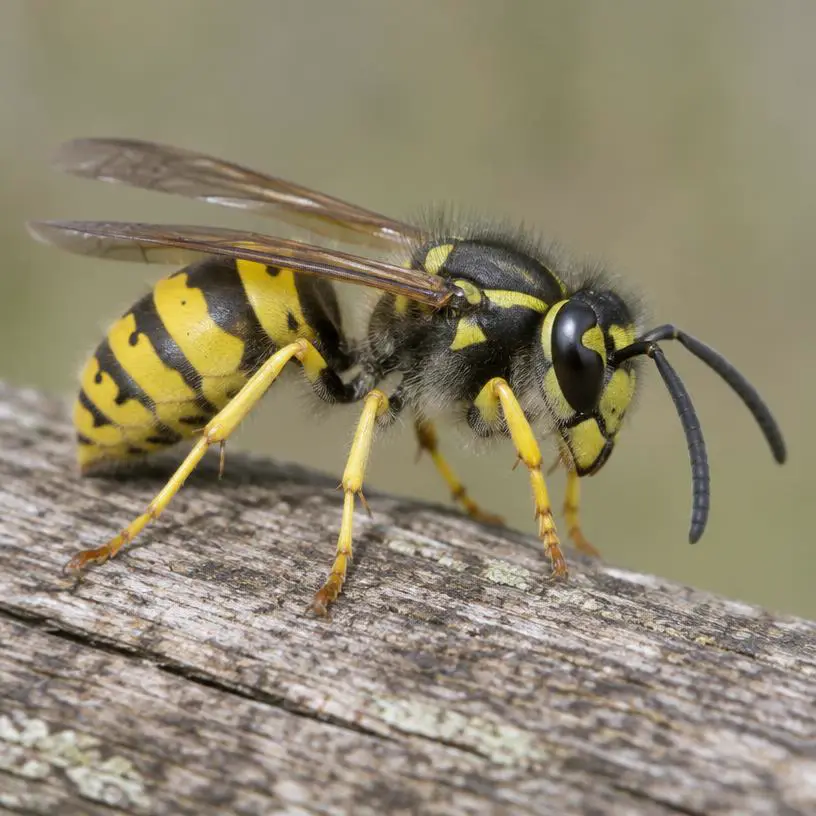
Do wasps reuse their nests each year?
No. A new queen starts a new paper nest in spring. Workers build up through summer and the colony declines later in the season; new queens overwinter elsewhere. A sheltered roof gap can attract another queen in a later year even though she does not reuse the old nest.
The calendar is a guide, not a timetable
The familiar wasps around homes and gardens are social insects with annual colonies. Their activity follows the seasons, but a month-by-month guide cannot predict exactly what a particular nest is doing. Temperature, food, shelter and the species all influence when queens emerge and how a colony develops.
Use seasonal knowledge to understand what you see, not to decide that an entrance must be safe because winter is approaching. A warm spell can bring insects out, while rain can temporarily reduce flying at an active nest. Repeated movement into one opening is a more useful sign of a colony than the date alone.
Winter: queens in sheltered places
New mated queens are the stage that normally survives winter. They shelter in protected places such as crevices, sheds and other dry recesses. The old colony does not hibernate together inside its paper nest ready to resume work in spring. Its workers and old queen die as the season ends.
Finding one large wasp indoors during cooler weather therefore does not necessarily mean an active colony is inside the wall. It may be an overwintering queen disturbed by warmth or moving stored materials. Avoid handling it. If there are repeated sightings or a clear flight line, describe those observations when seeking identification rather than making assumptions from size alone.
March and April: a queen starts again
As conditions become suitable in spring, queens emerge and search for food and nesting sites. A queen builds the first paper cells from chewed wood fibres, lays eggs and tends the developing brood. At this stage she may be seen visiting a sheltered corner repeatedly while there is little other obvious activity.
Spring inspections can be done visually from safe ground positions around sheds and external roof edges. Do not poke at a small nest or remove panels to follow a queen. A quiet structure can still contain a defending insect, and similar-looking activity can involve bees. Identification and the location of people matter more than whether the nest looks manageable.
May and June: the first workers take over
When the first adult workers emerge, they take over tasks such as collecting food, tending larvae and expanding the paper nest. The queen can then concentrate on laying eggs. As the workforce increases, the flight line may become easier to recognise, even if the nest itself remains hidden in a roof or cavity.
This is often when a household first notices repeated use of an opening under the eaves or beside a shed. Do not block it to stop the traffic. A concealed colony may use alternative routes, and the safest next step is to assess whether its location can be left undisturbed or requires professional wasp control.
July and August: a busy colony
Summer colonies can have substantial worker activity. Workers gather insect prey for developing larvae and obtain sugars from available sources. Gardens, parks and outdoor eating areas offer opportunities to forage, so a wasp visiting lunch is not proof of a nest under the nearest roof tile.
In Middlesex, 1930s semis may offer sheltered roof spaces while Victorian terraces can place nest entrances close to compact gardens and shared paths. Monitor the point where insects repeatedly enter, not just the number at a picnic table. Keep drinks covered, clear spills and avoid swatting. If a nest is beside an unavoidable route, call for advice rather than waiting for it to become larger.
September and October: reproduction and change
Later in the colony’s life, males and new queens are produced. New queens mate and seek places to overwinter. As the colony’s brood rearing and social organisation change, workers may be conspicuous around sugary food. Seasonal nuisance at bins and outdoor tables does not necessarily mean a new nest has appeared nearby.
Wasps can still sting and defend an active nest during this period. It is not helpful to assume that every autumn wasp is unusually aggressive or that a nest will certainly stop by the end of a particular month. Maintain separation, keep waste contained and make treatment decisions according to exposure rather than a seasonal label.
Late autumn: decline and the empty nest
As conditions deteriorate, the old colony dies out. The abandoned paper nest is not reused the following spring, although another queen may choose a new site within the same building. A dry nest can remain visible long after it has ceased to contain living wasps, particularly in an undisturbed loft.
Do not tear into a roof space simply to remove an old nest. Once inactivity has been established, routine maintenance can address suitable external gaps where appropriate without blocking ventilation. If flying continues during mild weather, do not assume the structure is empty. Advice based on the entry point and current activity is safer than testing it with a stick.
Using the life cycle to make safe decisions
A remote nest can sometimes be left through its natural season. A colony by a doorway, play area or occupied room may need attention sooner, especially where someone has a known sting allergy. We are based in Ruislip, Middlesex, and treat nests from the ground with a telescopic pole, with one fixed price given on the phone, no call-out fee and a free revisit.
For a sting followed by breathing difficulty, mouth or throat swelling, faintness or collapse, call 999 and use prescribed adrenaline as directed. We never treat bees; contact local beekeepers or BBKA swarm collectors for suitable bee advice. Report suspected Asian hornets to GB NNSS through the Asian Hornet Watch app and do not attempt treatment.
Frequently asked questions
Do wasps return to the same nest?
The old paper nest is not reused. A new queen may nevertheless find another suitable site in the same building.
Why are there wasps at autumn picnics?
Workers seek sugary foods, and outdoor meals and waste can attract foraging insects from surrounding colonies.
Does one large spring wasp mean a nest?
It may be a queen searching for a site. Repeated entry into one place is more informative than size.
When does a nest definitely become inactive?
There is no universal date. Weather and species influence activity, so seek advice if you remain unsure.