
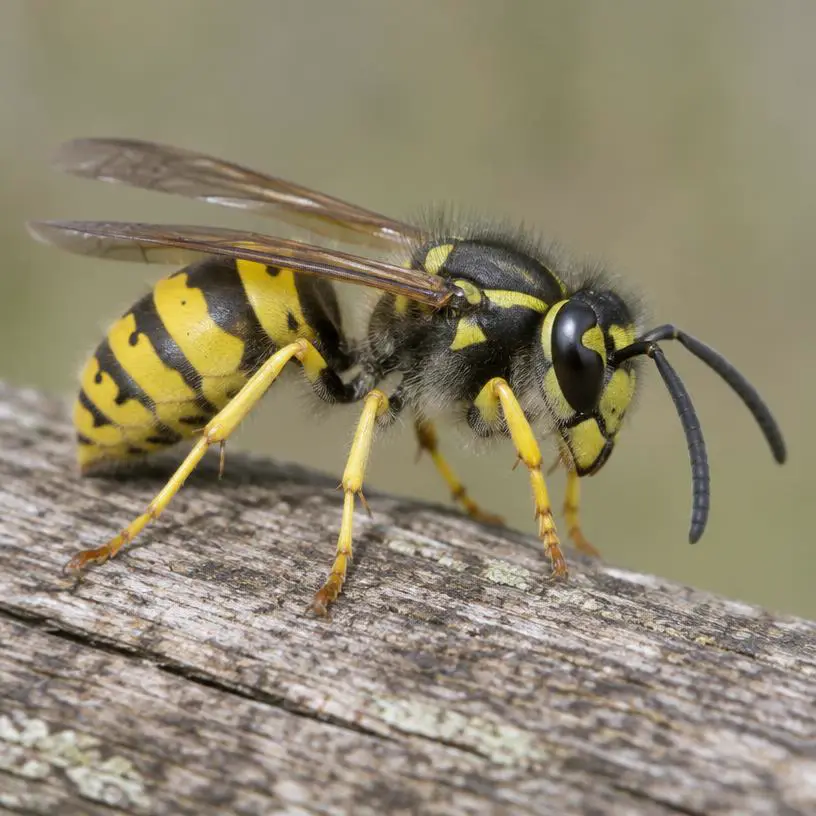
Where wasps go when winter arrives
Most worker wasps and the old queen do not survive the winter: the annual colony winds down and dies. New, mated queens leave to find sheltered places in which to overwinter, such as protected gaps, sheds or other quiet spaces; they do not normally spend winter in the old nest. A cold snap may reduce flying, but there is no fixed frost date by which every colony becomes inactive.
This seasonal pattern explains why a paper nest left in a loft is not usually occupied again the following year. It does not mean every wasp seen in winter is a queen, or that a quiet nest is definitely dead. The insect, weather and location all matter, so use what you can safely observe rather than a calendar assumption.
The annual colony and its new queens
In spring, a queen that has survived winter starts a new nest and raises the first workers. As the colony grows, workers take over foraging and nest care. Later in the season, the colony produces males and new queens. After mating, the new queens seek shelter; the old colony eventually declines as its workers and founding queen die.
The exact timing varies with species, local conditions and weather. A mild autumn can support activity later than expected, while cold or wet conditions can make a colony appear quiet temporarily. Do not treat a single chilly day, or the first frost, as proof that a nest is inactive.
Why wasps may still appear indoors
An individual wasp indoors during winter or early spring may be a queen that has emerged from sheltered overwintering, perhaps after a warm spell or because a room or roof space has warmed. It might also have entered through an open door or window. Seeing one insect does not prove there is an active nest in the house, and it does not by itself establish that the wasp is a queen or even identify its species.
If you see one, keep people and pets away and allow it to leave through an open external window or door if you can do so without approaching or trapping it. Avoid swatting at it. If wasps recur in the same room, note where they appear and whether there is a repeated route outside, but do not investigate a wall or roof void.
Safe signs of a nest around a home
Repeated arrivals and departures at one opening are more useful evidence of a nest than occasional wasps crossing the garden. From a safe distance, you might see a steady flight line to a gap beneath roof tiles, an eaves joint, a shed or a wall opening. A nest itself may be hidden, and activity at a gap does not tell you exactly where the nest sits inside the structure.
Middlesex homes include terraces, semis and loft conversions with varied roof edges and wall junctions; these features can offer sheltered access, but the house type or age alone is not evidence of a nest. Do not climb, move insulation, tap a surface or open panels to check. If insects appear near a socket, light fitting or other electrical fitting, leave it untouched and seek qualified help; never spray into an electrical fitting or an enclosed void.
If the suspected entrance is in a loft, keep the hatch closed and do not move stored items to look for a nest. With a wall cavity, leave the opening and nearby brickwork alone. These simple precautions avoid bringing you close to an unseen colony while you gather observations from outdoors.
Bees, wasps and when to get help
Identification matters. Bees are not wasps and should not be treated as a pest-control target; if you suspect bees, seek advice from a local beekeeper or an appropriate bee organisation. From a distance, describe the insects and their behaviour rather than trying to catch one or disturb a nest. The RHS provides guidance on the value and identification of wasps.
Do not block a busy entrance, knock down a nest or spray into a wall, loft or roof void. Disturbance can drive insects to seek another way out, potentially towards occupied rooms. If a flight route creates a real risk, contact a suitably qualified pest professional and explain where activity is occurring.
Leaving winter shelter undisturbed
A sleeping queen in a shed or other sheltered recess does not call for nest treatment. Leave the space undisturbed where it can safely remain unused, rather than moving stored objects to search for more insects. When spring maintenance is due, check the working area visually before handling equipment; an unexpected insect is a reason to pause, not to start spraying every protected corner.
Stings and urgent symptoms
If stung, move away from the insects and follow NHS advice for bites and stings. Call 999 for signs of a severe allergic reaction such as breathing difficulty, swelling of the mouth or throat, faintness or collapse. If the person has a prescribed adrenaline auto-injector, use it as directed while seeking emergency help.
Sources
Frequently asked questions
Do wasps die as soon as frost arrives?
No. Cold weather can limit activity, but there is no fixed frost deadline for every colony. A colony declines seasonally, while newly mated queens overwinter separately.
Will a wasp nest be used again next year?
Normally not. The annual colony ends and surviving new queens establish nests afresh; they do not usually reuse the old paper nest.
Does one wasp indoors mean there is a nest?
No. It may be an overwintering queen or an insect that entered from outside. One sighting alone cannot prove a nest or confirm the insect’s identity.
Can I spray into a wall or loft if I hear buzzing?
No. Do not spray into voids or electrical fittings, and do not open or block them. Keep clear and seek professional advice if activity is repeated.