
Nest location guide
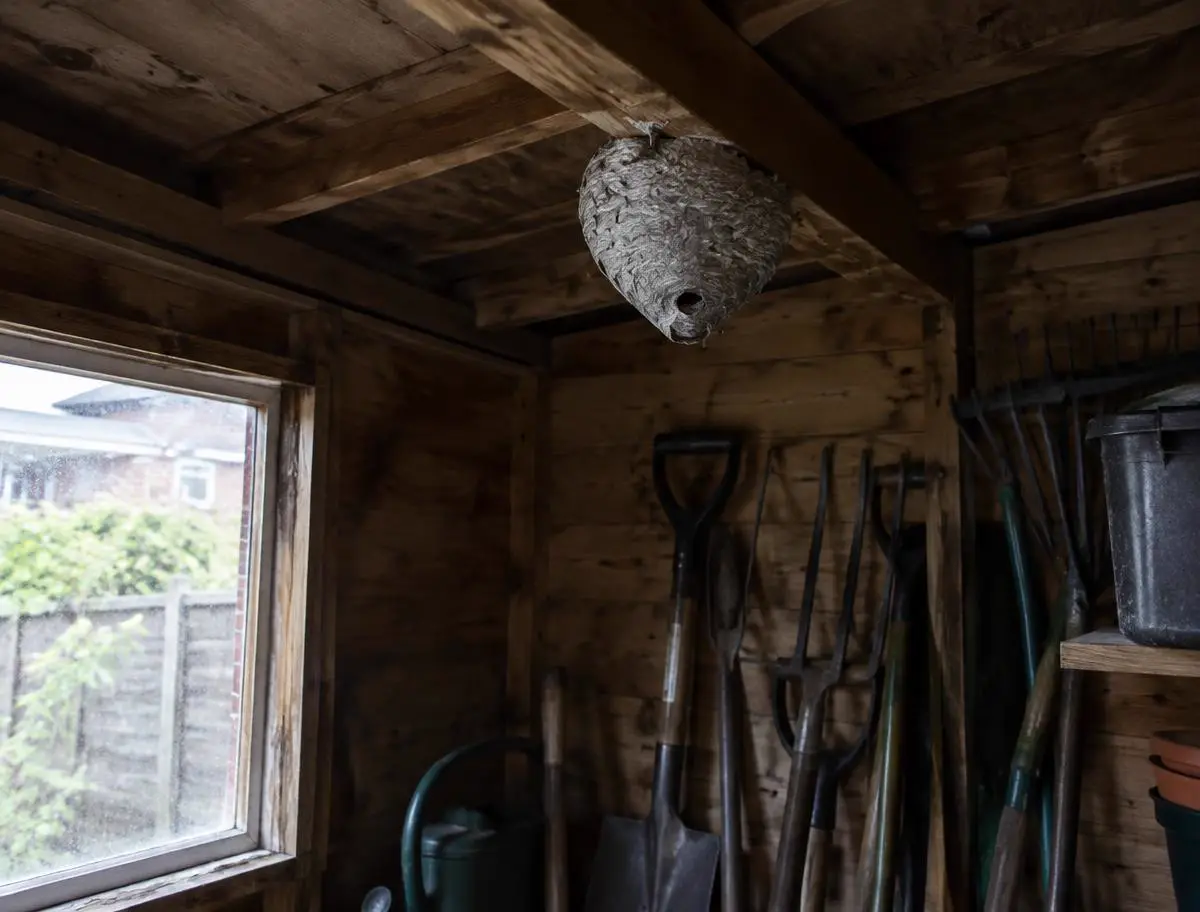
A wasp nest in the shed and garage
A quiet shed roof or garage corner gives wasps somewhere to hang a paper nest. Stop fetching tools once you notice a colony: moving a door, stacked boards or stored furniture can disturb it at close range.
One message and a technician confirms the price and a time to visit.
What should I do about a nest in the shed and garage?
- Do not knock down the paper nest
- Leave tools and stored items beside the colony in place
- Pause machinery and avoid changing its usual entry route
How is this nest treated?
We inspect the outbuilding entrance and identify whether the nest is exposed or inside a panel void. We then treat the accessible nest or flight opening with a suitable professional application, using a lance to keep clear.
How long does treatment take to work?
Shed and garage nests typically quieten within 2–3 hours and are fully inactive within 24 hours. Stay out until the treatment’s re-entry instructions are satisfied.
Roof gaps, door frames and sheltered beams
A queen can enter beneath corrugated roofing, around a door frame or through a loose cladding joint. She often attaches her first cells beneath a roof board or joist, where an undisturbed colony can grow unnoticed behind stored belongings.
Garages used every day still have quiet corners above shelves or behind panel linings. Regular vehicle access does not rule out a nest elsewhere in the building.
Signs before you reach for the tools
Paper hanging from a beam, traffic through a single roof joint and repeated buzzing around one shelf all deserve a pause. Watch from outside rather than stepping into the doorway to look upwards.
An up-and-over garage door may pass close to the nest or shake its supporting structure. Tell us where you saw the insects and how the door operates, without opening it again to demonstrate.
Why DIY is risky inside an outbuilding
A shed aisle can leave you trapped between stored equipment and a disturbed colony. Striking the paper shell or spraying its surface can release workers before the treatment reaches the inside.
Fuel cans, electrical equipment and pets housed nearby add further reasons to avoid improvised chemicals. Switch off machinery from a safe position if possible, and leave non-essential belongings inside until the nest is controlled.
Direct treatment or treatment through a panel gap
The technician confirms the insects and checks the contents, access and flight route. An exposed nest can receive a suitable direct application; a concealed colony is treated through the opening workers use in the roof or wall panels.
A lance allows the technician to keep distance instead of standing underneath the nest. We leave cladding and stored items undisturbed where the existing route gives access, and explain any temporary restriction on using the building.
When you can use the shed or garage again
The colony usually goes quiet in 2–3 hours and is fully inactive within 24 hours. Follow the application-specific re-entry instruction as well as checking that the flight line has stopped.
Do not resume woodworking, mowing preparation or shelf clearing during the first settling hours. If workers are still regularly using the same gap the following day, get in touch for the free revisit rather than knocking the nest down.
Removing paper and preventing another colony
An empty nest on an accessible beam may be removed after confirmed inactivity if it obstructs storage. It can also stay in place, since a new queen will not reuse that old paper structure.
Repair loose roof sheets and split cladding, then organise shelving so roof corners can be checked visually in spring. Keep designed vents open and look before moving furniture that has stood untouched through the nesting season.
Frequently asked questions
Do I need to clear my garage for treatment?
Do not move anything beside the nest; describe the stored contents so we can plan access without disturbing the colony.
Can I drive the car out past the nest?
Avoid operating a door or passing beneath the colony to retrieve a vehicle until the entrance and door movement have been assessed.
Should the empty shed nest be taken down?
Removal is optional once activity has ended, unless the paper obstructs planned work or storage.
Treatment and local advice
How nest treatment works · Wasp and hornet guides · Find your town
Price
£129 fixed price, wasps or hornets. No call-out fee. Free revisit if required. See how pricing works.
Other nest locations
Speak to a technician, not a call centre.
Fixed price on the phone. No call-out fee. Free revisit if the nest is still active.