
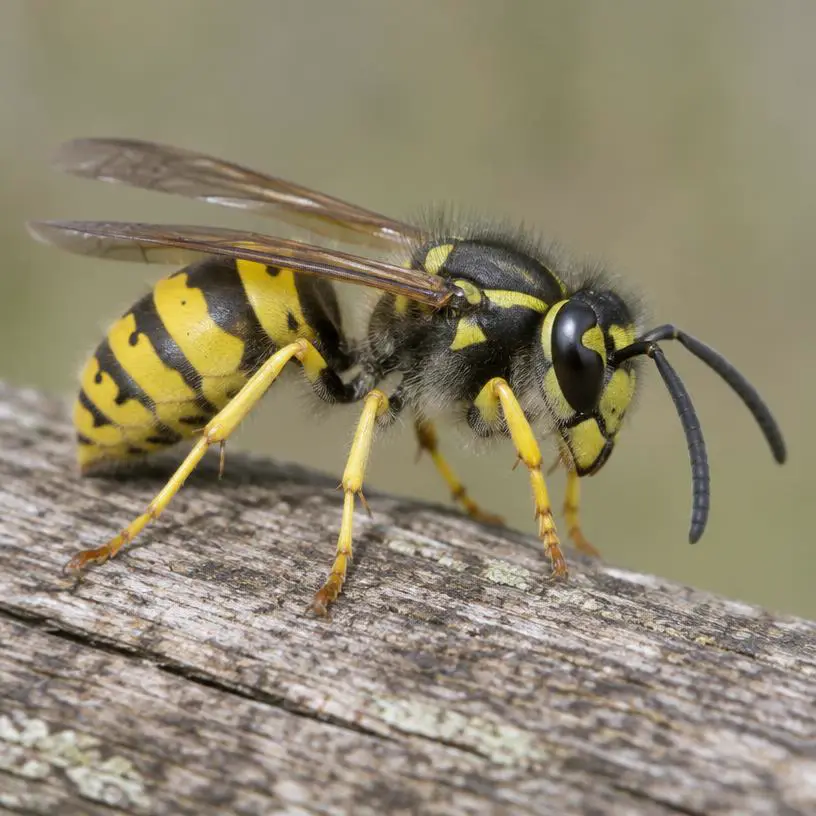
A wasp indoors: is it a queen?
It could be a queen, particularly in winter or early spring, when a mated queen may emerge from sheltered overwintering after warmth. But a single wasp indoors is not proof that it is a queen, that a nest is present, or even that it is definitely a wasp. It may have entered through a door or window, and appearance alone can be difficult to judge.
Wasps have an annual colony cycle: most workers and the old queen die as the season ends, while new queens seek protected places to survive winter and start separate nests in spring. There is no fixed frost deadline, and brief warmth can prompt movement. A lone insect is therefore different from repeated traffic to and from a point in the building.
What to do about one wasp
Keep children and pets away and avoid sudden movements or swatting. If it is safe, open an external window or door and give the insect a clear route out; do not put your hands near it or try to catch it. If you cannot safely do this, close off the room and ask for suitable help rather than taking risks.
Make a note of where and when it appeared. One wasp near a bright window may simply be trying to get outside. A series of sightings from the same room, especially alongside a repeated outdoor flight route, is more useful information to pass on. Do not open a ceiling, wall, loft hatch or service panel to search.
Avoid leaving food or sweet drinks uncovered in the room while you wait, as these can attract a wasp that has already entered. This will not solve a hidden nest, but it can reduce an avoidable attraction and make the insect easier to observe without approaching it.
When repeated indoor sightings need investigation
Several wasps appearing in one room can justify checking for a route into the building, but it still does not identify the source. Insects may come through a gap around a window, a roof void, a cavity or another opening. From outside and at a safe distance, look for repeated arrivals at one precise gap; do not stand in the flight path or attempt to follow insects into a concealed space.
A Middlesex terrace or semi may have roof edges, extensions and wall junctions that conceal voids, as can homes elsewhere. These are possible routes, not evidence by themselves. If indoor wasps appear beside an electrical fitting, do not remove the cover, touch wiring or spray into it. Keep the area clear and seek professional advice; an electrician should assess electrical concerns.
Record whether the wasps are actually coming from inside a room or merely gathering at a window, and whether the pattern changes over several days. That distinction can help an adviser decide whether the issue is a stray insect, an external entrance or a possible concealed route. Do not wait for a large number before seeking advice if people cannot safely use the affected room.
Do not assume it is a wasp
Bees and other insects can be mistaken for wasps, particularly when seen briefly or in poor light. Do not trap or handle an insect to identify it. If you suspect bees, do not use wasp treatment: contact a local beekeeper or an appropriate bee organisation for advice. The RHS offers information about wasps and their role in gardens.
A safe observation is enough: note the approximate size and markings if visible from a distance, how it moves, and where it entered. A photograph is optional and should only be taken without approaching, provoking or blocking the insect. Identification should guide any response; a generic insect spray is not a substitute for it.
Avoid sprays and disturbance in hidden spaces
Do not spray into a wall cavity, loft, roof gap or electrical fitting, and do not seal a suspected entrance while insects may be active. Spraying into a void may expose people to chemicals without reaching the source; sealing an opening can redirect insects into another part of the home. Never dismantle fittings, move insulation or knock on a suspected nest to test it.
If repeated activity suggests a nest, keep people away from the route and contact a qualified pest professional for an assessment. Explain the number of indoor sightings, the rooms involved, any outdoor entrance observed and whether anyone has a known sting allergy. Do not treat bees as wasps.
Preparing a useful enquiry
Describe the room, the season and whether the insect appeared once or has returned repeatedly. Mention any recent building work without assuming it caused the problem. A photograph from where you already stand may help identification, but there is no reason to pursue the wasp into a recess for a better picture.
Stings and emergency advice
For a sting, move away from the insect and follow the NHS guidance on insect bites and stings. Call 999 if there is breathing difficulty, swelling of the mouth or throat, faintness or collapse, which can indicate anaphylaxis. Use a prescribed adrenaline auto-injector as directed and follow emergency call-handler instructions.
Sources
Frequently asked questions
Are winter wasps always queens?
No. A queen is one possibility, but a lone insect could have entered from outdoors or be another species. Do not infer identity from the season alone.
Does finding one wasp mean there is a nest in my house?
No. One sighting does not prove a nest. Repeated indoor appearances and a consistent outdoor entry route are more useful signs to report.
Should I spray the gap where it disappeared?
No. Do not spray into wall or roof voids, electrical fittings or other concealed spaces. Keep clear and ask for an assessment if activity repeats.
What if the insect might be a bee?
Do not apply wasp treatment. Observe from a safe distance and contact a local beekeeper or appropriate bee organisation for identification advice.