
Harrow · HA5
Wasp & hornet nest removal in Hatch End
Same-day wasp nest treatment across Hatch End HA5. £129 fixed, wasps or hornets.
One message and a technician confirms the price and a time to visit.
Years' experience
Since 2005
Wasps & hornets only
Not general pest control
- Fully licensed & insured
- No call-out fee
- Free revisit
- We never treat bees
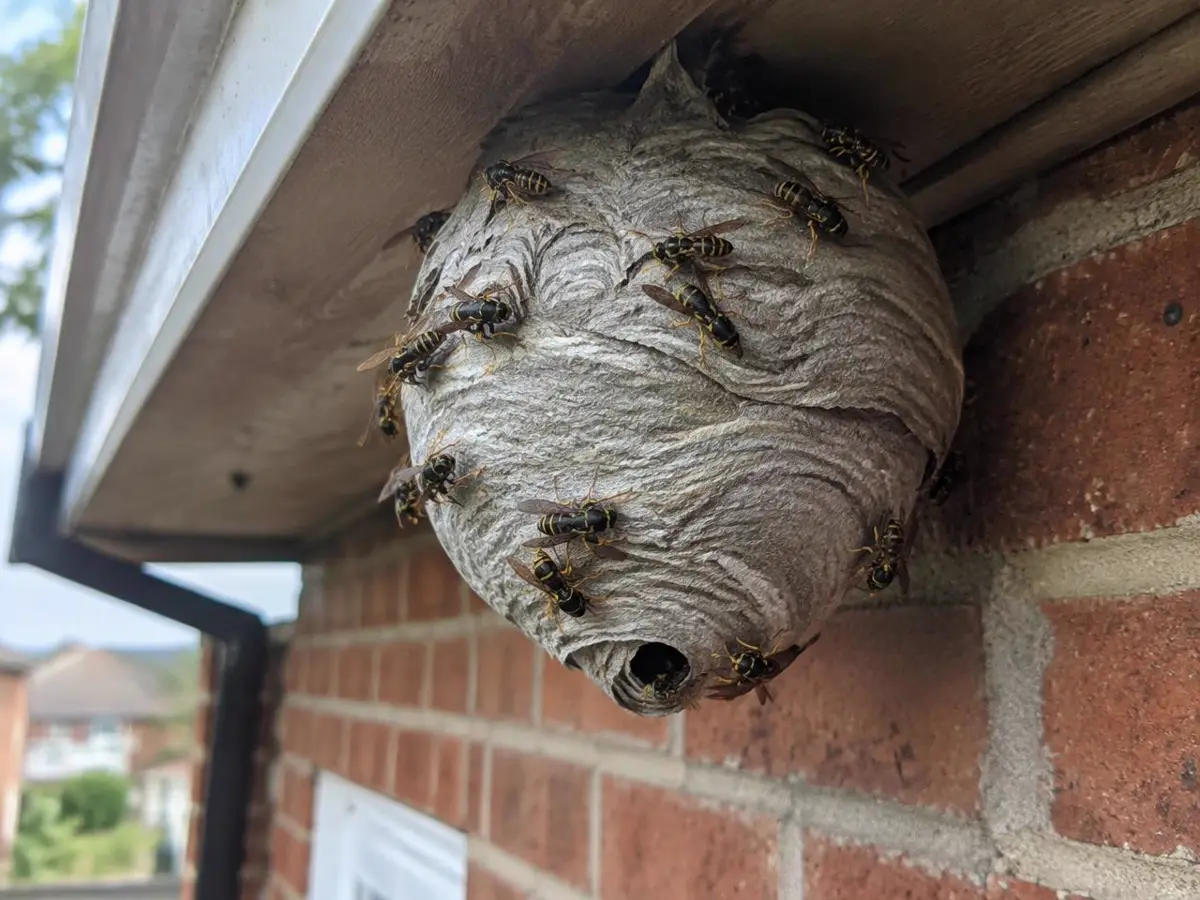
- Step 1Send a photo or call
- Step 2Treated today, usually from the ground
- Step 3Nest quiet in 2–3 hours
Wasp nest removal in Hatch End
Hatch End is a leafy suburb between Pinner and Harrow Weald, grown up around its station and the shops on Uxbridge Road, with large gardens and plenty of mature trees.
Wasp nest removal in Hatch End often means a nest high in a gable, deep eaves or a big loft, or in one of the many trees and hedges in the area's long gardens. The suburb grew around the station from the Edwardian period through the 1930s, with large semis and detached houses, many with mock-Tudor detailing.
Most Hatch End nests are treated from the ground with a telescopic lance aimed at the gap the wasps already use.
Fixed price
What £129 includes
- Treatment of one wasp or European hornet nest
- No call-out fee
- Free revisit if still active
- Aftercare advice
- Price confirmed before we visit
20
years treating wasp and hornet nests
- Rats — not treated
- Mice — not treated
- Bedbugs — not treated
- Cockroaches — not treated
- Fleas — not treated
- Moles — not treated
- Wasps & hornets
Assessing wasp nest sites around Hatch End homes
Many Hatch End homes are large 1920s and 1930s semis and detached houses with steep tiled roofs, gables and deep eaves. Decorative timber and render on the gables leave gaps behind the boards, and the eaves often have small openings where wasps get into the loft. Because the roofs are high, nests here are sometimes only noticed when wasps appear inside the house.
There are also Edwardian houses near the station, bungalows on some side roads and flats above the shops on Uxbridge Road. Extensions, dormers and loft conversions are common, and the joins between new and old roofs are frequent entrances. Flats may have the nest in a shared roof or a communal bin store.
Gardens in Hatch End are generous, often backing onto other gardens, Pinner Park or the edge of Harrow Weald Common. Mature trees, hedges, sheds and summer houses all take nests, and ground nests are common in lawns and borders. The usual first sign is a steady stream of wasps in and out of one point while you are in the garden.
Hatch End wasp nests: gables, lofts and leafy gardens
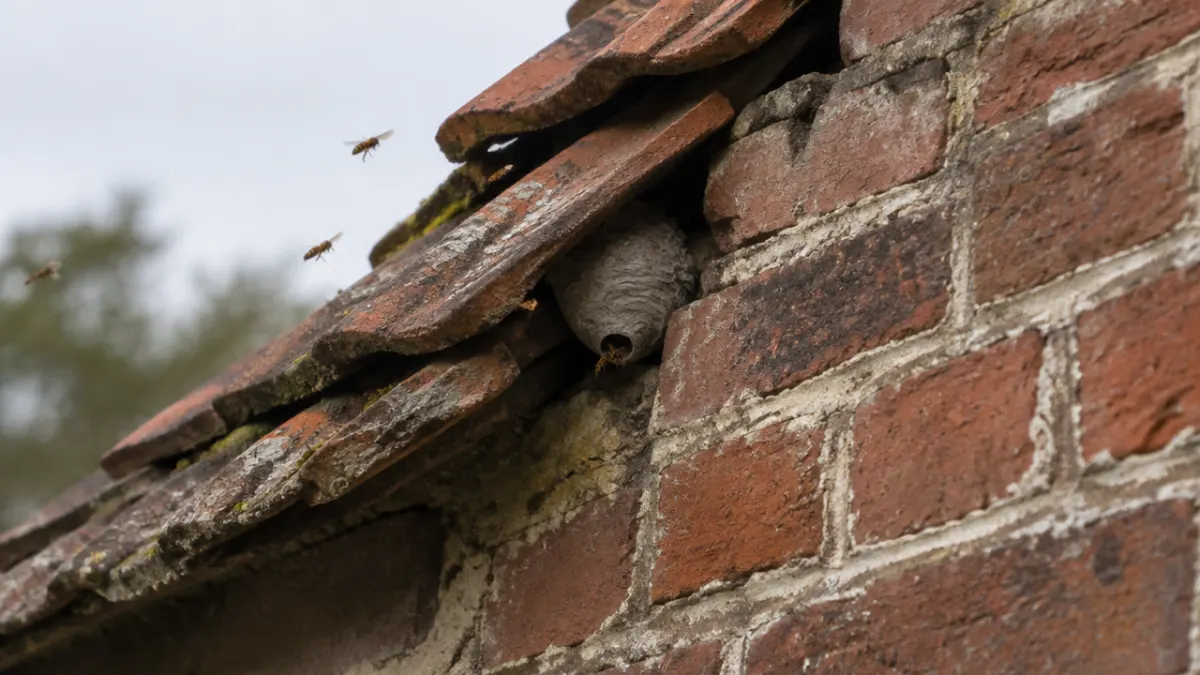
Behind the decorative timber and render on mock-Tudor gables.
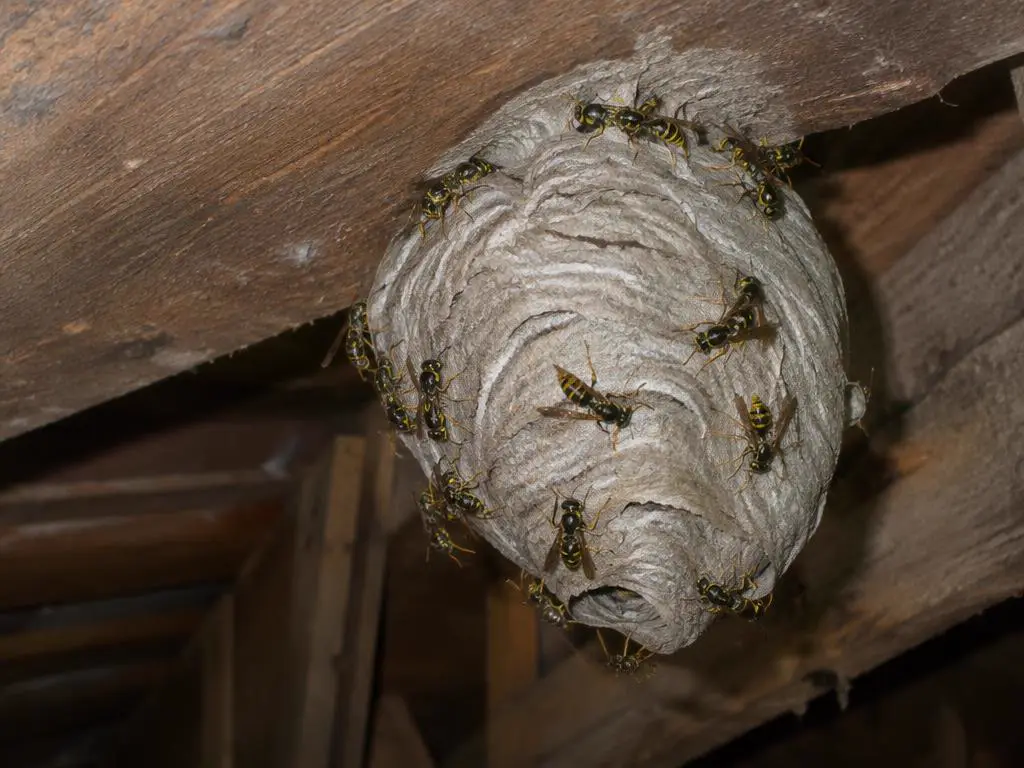
Large lofts of semis and detached houses, reached through gaps in deep eaves.
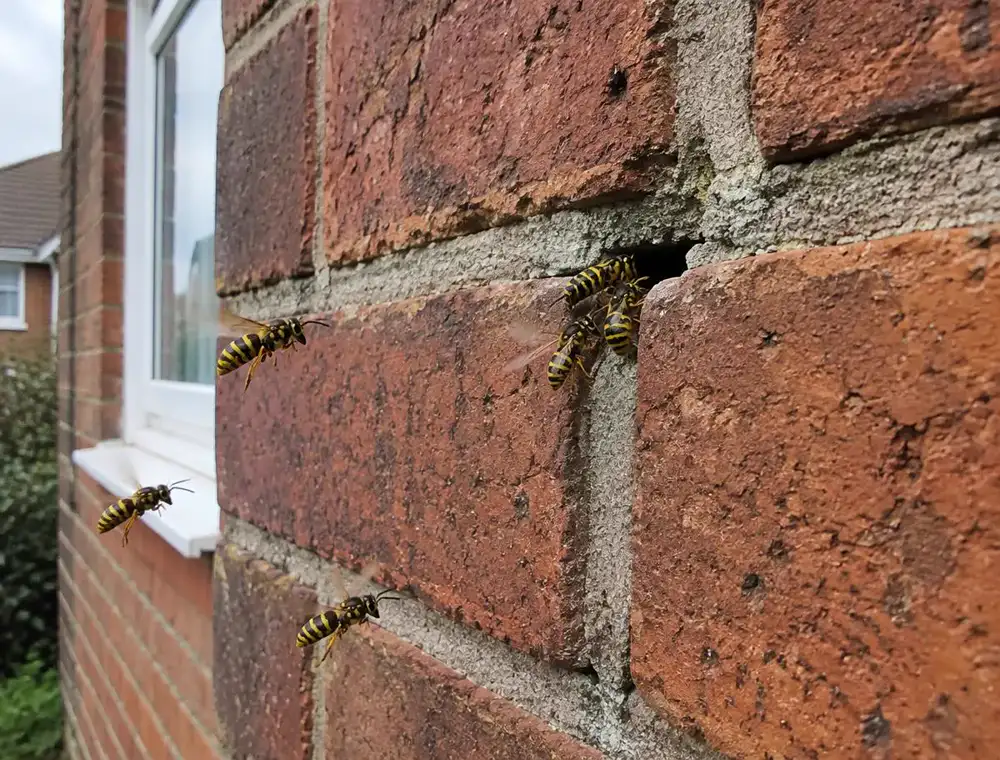
Around dormers and loft conversions, where the new roof meets the old.
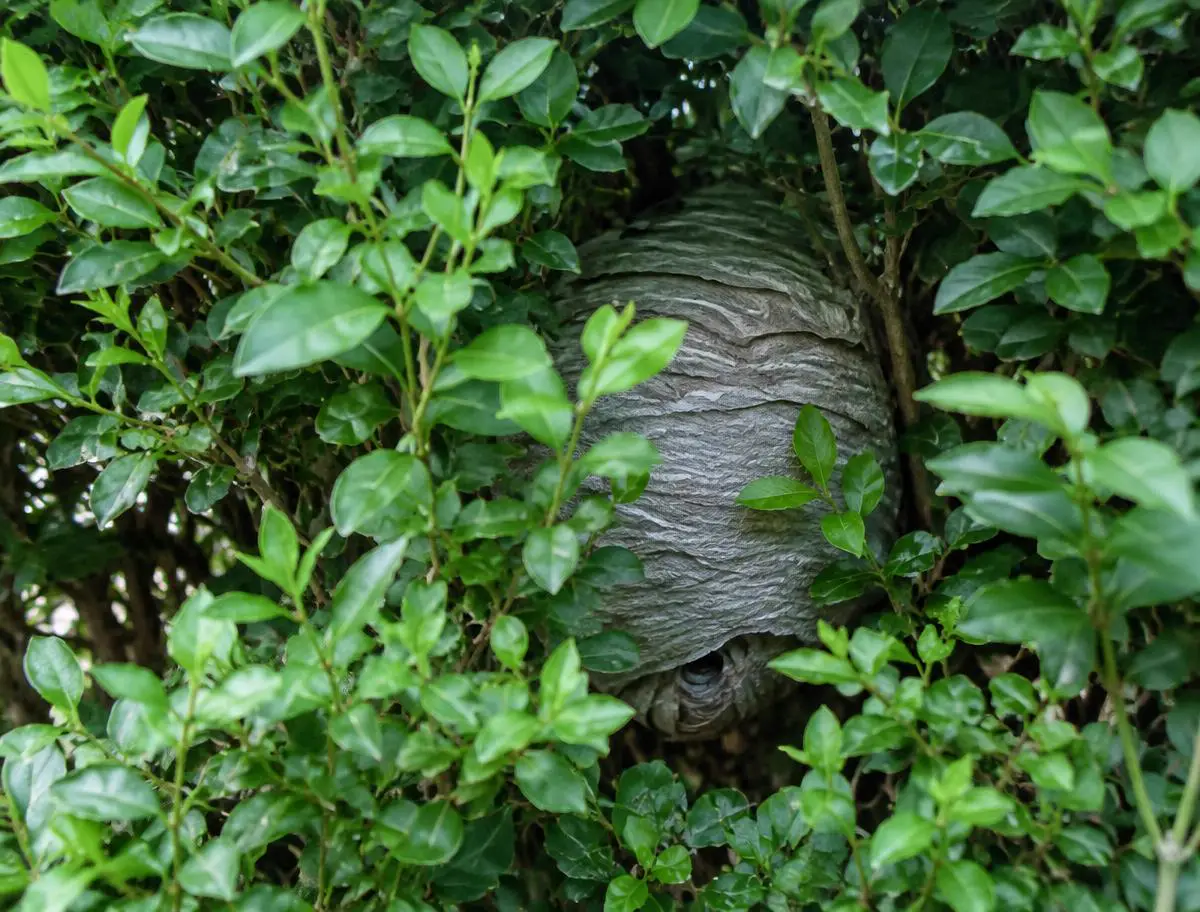
Mature trees and tall hedges in gardens backing onto Pinner Park and Harrow Weald Common.
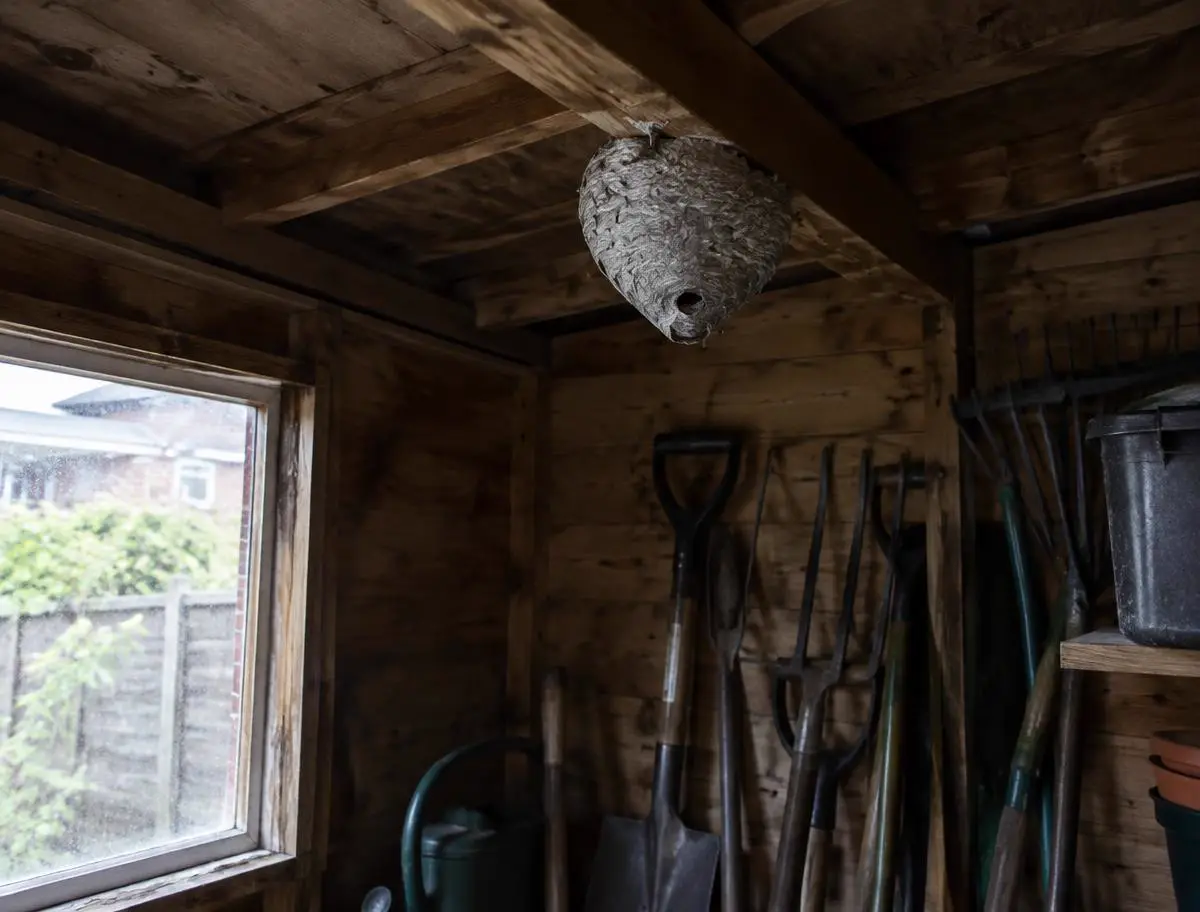
Sheds, summer houses and garages at the end of long gardens.
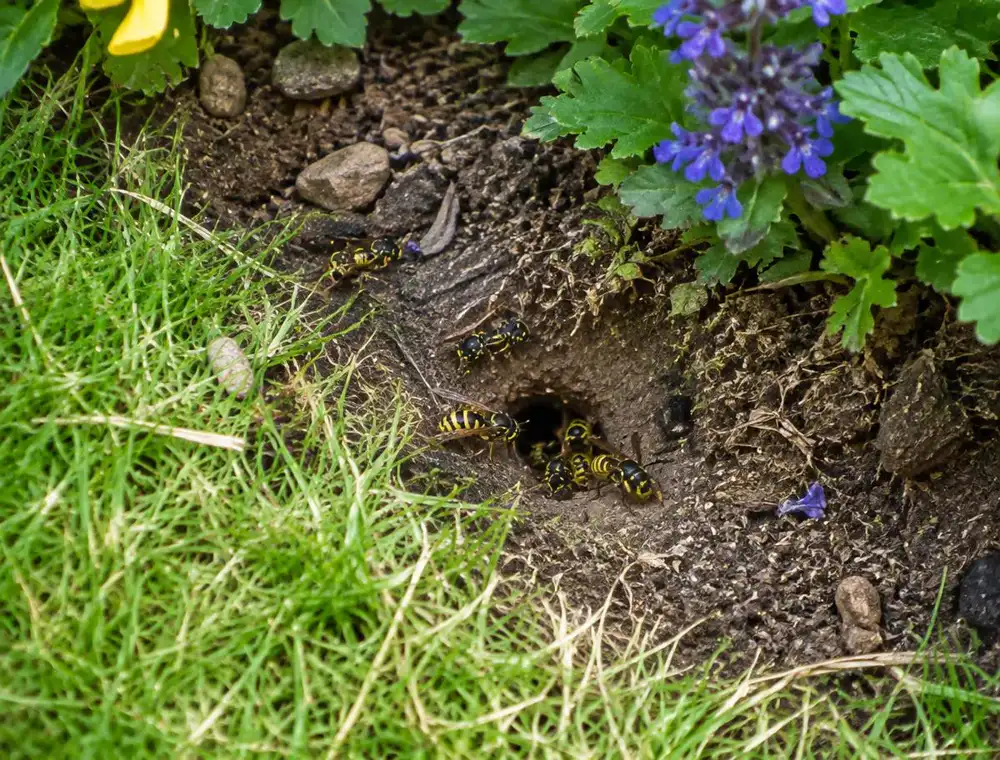
Holes in lawns and flower borders, especially in late summer.
Our approach to wasp nest treatment in Hatch End
- Arrive
- Dust applied at entrance
- 2–3 hrs quiet
- 24 hrs inactive
- Free revisit if needed
£129 fixed, no call-out fee.
A Hatch End nest is treated through the entrance the wasps already use, not by taking off gable boards or tiles. We direct professional insecticide dust into that gap with a telescopic lance, usually from the ground, and returning workers carry it into the colony. If wasps are getting into a bedroom, tell us when you call and ask about same-day slots; we confirm a daylight appointment subject to availability.
The nest usually quietens in 2–3 hours and is fully inactive within 24 hours. Keep children and pets away from the entrance until then and follow the technician's aftercare advice. DIY sprays rarely reach a high nest, and sealing an active gap can send wasps indoors. The fixed price is £129, with no call-out fee and a free revisit if required; European hornet nests are the same price.
Where's your nest? Tap the house
01
What it probably is
02
Please don't
- Do not move insulation or stored boxes beside activity
- Keep the loft hatch closed
- Do not spray into the roof space or seal the roof entrance
03
How we treat it
04
Time to inactive
Price£129 fixed price, wasps or hornets. No call-out fee. Free revisit if required.
Hatch End HA5 this month
Checking the season
Wasp nest control on a Hatch End semi
An illustrative wasp nest example: a family in a 1930s semi off Uxbridge Road see wasps going in and out behind the timber on the front gable, two storeys up. We confirm the fixed price and book an available daylight slot, then treat into the gap from the drive with an extended telescopic lance. No scaffolding is needed and the timber stays in place.
Activity usually drops within a few hours and the nest is inactive within a day. Keep the front bedroom window shut until then and leave the gap alone for a few weeks; after that it can be sealed so next year's queens look elsewhere. If the gable is unusually high or hard to reach, tell us when you book so we bring the right equipment.
Planning parking and access for Hatch End nest treatment
When you call about a Hatch End nest, describe where wasps go in and out repeatedly and roughly how high it is. Wasps feeding in the garden are not always nesting nearby. Leave the entrance alone: blocking a gap behind a gable board can push wasps into the loft or a bedroom. Mention side access and anywhere children or pets use near the entrance.
For a European hornet nest in a tree, keep your distance and give us the location; bees are referred to beekeepers.
Most Hatch End houses have a drive and side access, which makes front and rear nests straightforward. Parking is usually easy on residential roads but busier near the station and the Uxbridge Road shops. For a very high gable or a nest in a tall tree, tell us roughly how high it is when you book. Flats with shared roofs may need the landlord or managing agent's agreement.
Business premises? See commercial wasp control.
Checking Hatch End hornet nests before treatment
Hatch End's mature gardens and the woodland around Harrow Weald Common and Pinner Park suit European hornets, and we treat hornet nests in HA5 at the same fixed price as wasps. We never treat bees: a swarm or a bumblebee nest is passed to a beekeeper or left alone.
If you are not sure what you have, describe or photograph it from a safe distance and we will tell you honestly.
Nearby areas we cover
For wasp nest treatment near Hatch End station, the Uxbridge Road shops, Harrow Arts Centre, Pinner Park and Harrow Weald Common, describe the active entrance and access when you call.
Neighbouring areas: wasp nest removal in Pinner, wasp nest removal in Harrow, wasp nest removal in Stanmore and wasp nest removal in Eastcote.
Hatch End wasp and hornet questions
Wasps are going behind the timber on my gable. Can you reach it?
Yes. The decorative timber and render on Hatch End's mock-Tudor gables often hide a gap behind the boards. We treat into the entrance with a telescopic lance from the ground in most cases, without removing the timber.
My Hatch End nest is very high up. Do you need scaffolding?
Almost never. Our telescopic lances reach the gables and eaves of two-storey houses from the ground. For a three-storey house or a nest very high in a tree, tell us roughly how high it is when you book so we can plan the right equipment.
Does a European hornet nest in Hatch End cost more than a wasp nest?
No. A European hornet nest treatment is £129 fixed, with no call-out fee and a free revisit, the same as a wasp nest. In Hatch End they are often in a hollow tree, a bird box or a shed; tell us which. Keep your distance; a suspected Asian hornet must be reported through Asian Hornet Watch instead.
Can I call in the evening about wasps in my Hatch End loft?
Yes, phone between 8am and 9pm every day and we will arrange the first available daylight treatment. If wasps are getting in through the loft hatch, keep it closed, put a towel along the gap and keep that room shut until we arrive.
I rent a flat near Hatch End station. Who should arrange the treatment?
Tell your landlord or managing agent straight away and agree who books and pays. Flats often share a roof or a bin store, so the entrance may be outside the part you rent. Explain where the wasps go in and what access you can give us; shared areas need the landlord's agreement.
How do I keep children safe from a nest in a Hatch End garden?
Keep children away from the entrance and use another route if the flight path crosses where they play. In Hatch End's long gardens the nest is often in a shed, hedge, tree or the ground at the far end. Do not move or block it; keep everyone clear during treatment and follow the aftercare advice afterwards.
Wasps in Hatch End today?
Call 020 8419 8769 or WhatsApp a photo.
Open 8am–9pm, 7 days a week · Typically same day in HA5