
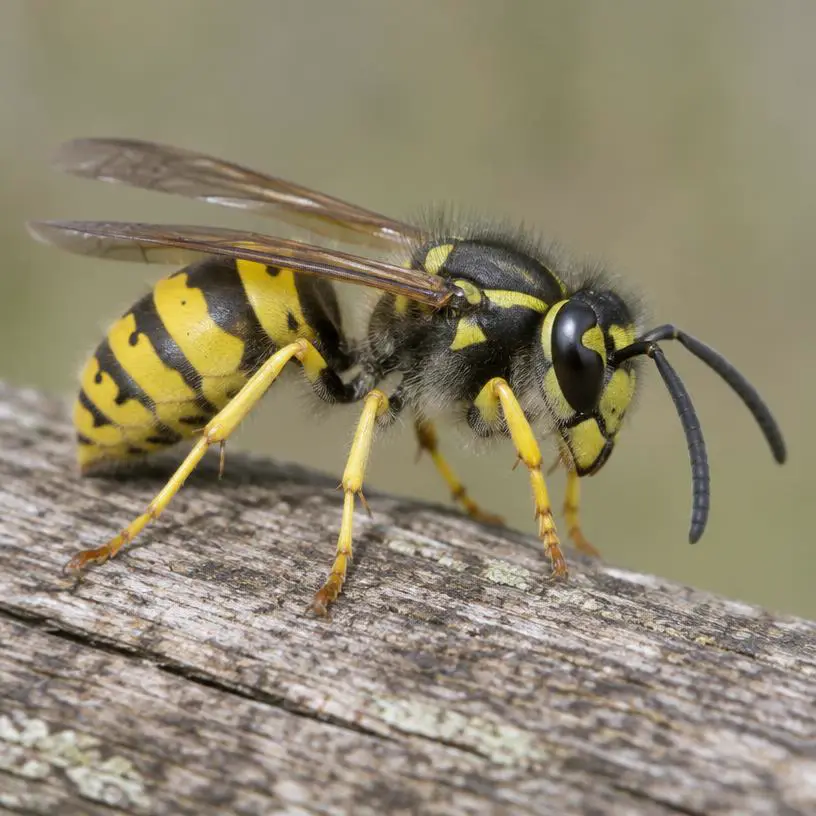
When is a wasp sting a medical emergency?
Call 999 immediately for breathing difficulty, swelling of the mouth or throat, faintness or collapse after a sting. Use a prescribed adrenaline auto-injector according to its instructions. For a local reaction, move away from the insects, wash the skin and use a cold compress; seek medical advice if symptoms worsen or you are concerned.
Move away before giving first aid
After a wasp sting, calmly move away from the area where it happened, especially if a nest may be nearby. Do not remain beside the entrance while checking the skin or trying to identify the insect. Help children and anyone who needs assistance to reach a place away from further exposure.
This guide is general first-aid information, not a diagnosis. A sting can cause local pain and swelling, but serious symptoms need urgent medical attention. Check how the person feels overall, not just the appearance of the mark. Breathing problems, mouth or throat swelling, sudden faintness or collapse require 999 immediately rather than home treatment or a pest-control call.
Wash and cool a local sting
For a local reaction, wash the affected area with soap and water. Apply a cold compress or an ice pack wrapped in a cloth for about twenty minutes to help swelling. Do not put ice directly against skin. If practical, raise the affected part and avoid scratching, which can damage the skin.
Wasps and hornets do not usually leave a sting behind. If a sting is visible, as can happen after a honeybee sting, remove it promptly by scraping sideways with a fingernail or the edge of a card. Avoid squeezing a visible venom sac. Do not dig into the skin searching for something that is not there or delay emergency care to remove it.
Relieving pain and itching sensibly
A pharmacist can advise about suitable medicines for pain, itching or swelling, taking account of age, other medicines and health conditions. Follow packet instructions and check suitability for children, pregnancy or existing medical problems rather than assuming an adult product is appropriate for everyone. Medication for itching is not treatment for anaphylaxis.
Avoid home remedies such as vinegar or bicarbonate of soda and do not apply improvised chemical mixtures. Keep the area clean and watch for changes. A local reaction can be uncomfortable without being a severe allergy, but redness that becomes hot, increasingly painful or accompanied by discharge or feeling unwell needs medical advice because infection or another complication may require assessment.
When to seek urgent NHS 111 advice
Seek urgent advice from NHS 111 for a sting in the mouth or throat, near the eye, multiple stings or symptoms that are worsening. A previous serious allergic reaction to a sting is another reason to seek urgent advice and follow the person’s prescribed plan. Do not wait for a pest controller to decide whether medical care is necessary.
If there is difficulty breathing, throat swelling, collapse or another sign of a severe allergic reaction, call 999 instead. The distinction is not based simply on the size of swelling around the sting. Tell the health adviser where the person was stung, approximately when it happened, the symptoms and any known allergy or medication already used.
Recognising anaphylaxis and calling 999
Anaphylaxis is a severe allergic reaction that can develop rapidly. Warning signs include difficulty breathing, swelling of the mouth, tongue or throat, sudden dizziness, faintness or collapse. A person may also have widespread itching or a raised rash, but do not wait for a rash if serious symptoms are present.
Call 999 immediately and say that you suspect anaphylaxis. Use a prescribed adrenaline auto-injector without delay according to its instructions, if the person has one. Ask another person to make the call if possible while help is given. A past mild reaction does not rule out a serious reaction now, and identifying whether the insect was a wasp, bee or hornet is not the priority.
While waiting for the ambulance
Help the person lie down with their legs raised. If breathing is difficult, they may need to raise their shoulders or sit up slowly; follow the emergency call handler’s advice. Do not let them stand or walk, even if they seem to improve. For pregnancy, lying on the left side is generally advised.
If symptoms have not improved after five minutes and a second prescribed adrenaline auto-injector is available, use it as directed. Follow the call handler’s instructions if the person becomes unresponsive or is not breathing normally. They will guide you through immediate care, including CPR where needed. Stay with the person and tell the ambulance crew what medication was given and when.
Preventing another sting at the location
After immediate care, keep people away from the suspected nest or flight line. Do not block its entrance, strike it or attempt treatment while upset or in a hurry. A person with a known sting allergy should not return to investigate, even with medication available. Keep children and pets away and postpone gardening or repairs nearby.
In Middlesex, a nest can be hidden under the eaves of a 1930s semi, in a Victorian terrace roof void or beside a garden path. Wasps visiting parks and outdoor food may also sting without there being a nest at the scene. Describe repeated entry points from a safe position rather than trying to locate the colony after every sting.
When to call for wasp control
Call for professional assessment if an active nest is beside an unavoidable route, wasps repeatedly enter living areas or allergy makes exposure particularly concerning. We are based in Ruislip, Middlesex, and treat nests from the ground with a telescopic pole. There is one fixed price given on the phone, no call-out fee and a free revisit.
We never treat bees: local beekeepers or BBKA swarm collectors can advise on appropriate bee help. Report suspected Asian hornets to GB NNSS through the Asian Hornet Watch app and do not attempt treatment. Medical care always comes before identification or pest control. For further health guidance, use NHS advice on insect bites and stings and anaphylaxis, or speak to a clinician.
Frequently asked questions
Should I call pest control before getting medical help?
No. Call 999 for suspected anaphylaxis or seek urgent NHS advice as appropriate. Medical care takes priority.
Do wasps leave a sting in the skin?
They do not usually. If a sting is visible, remove it promptly by scraping sideways rather than digging into the skin.
Will an antihistamine treat anaphylaxis?
No. Suspected anaphylaxis requires prescribed adrenaline as directed and an immediate 999 call.
What if the person improves after adrenaline?
They still need emergency medical care. Keep them from standing or walking and follow the call handler’s instructions.